Word Wow - Brain training fun
- 4.6
- Rating
- 1.00M
- Installs
- Free
- Price
 Analysis by App-foxy
I usually know within a few sessions whether a word game is going to become part of my routine or disappear from my phone. Word Wow - Brain training fun made a good first impression because it turns finding words into a quick, active challenge rather than a slow exercise in arranging tiles. I connect letters, clear a path, and try to keep the action moving. That simple loop is easy to understand, but it has enough pressure to make even a short break feel purposeful.
This is a free word game from DonkeySoft Inc., rated for Everyone. It is available on Android, including devices running Android 7.0 or later, and its current version is 2.5.62. The game has reached over 1 million installs, with a 4.6 average from around 17 thousand ratings and roughly 3.1 thousand written reviews. Those figures suggest that it has found a dependable audience, but the more important question for me is whether it remains enjoyable after the first burst of curiosity fades.
Why the first week feels so inviting
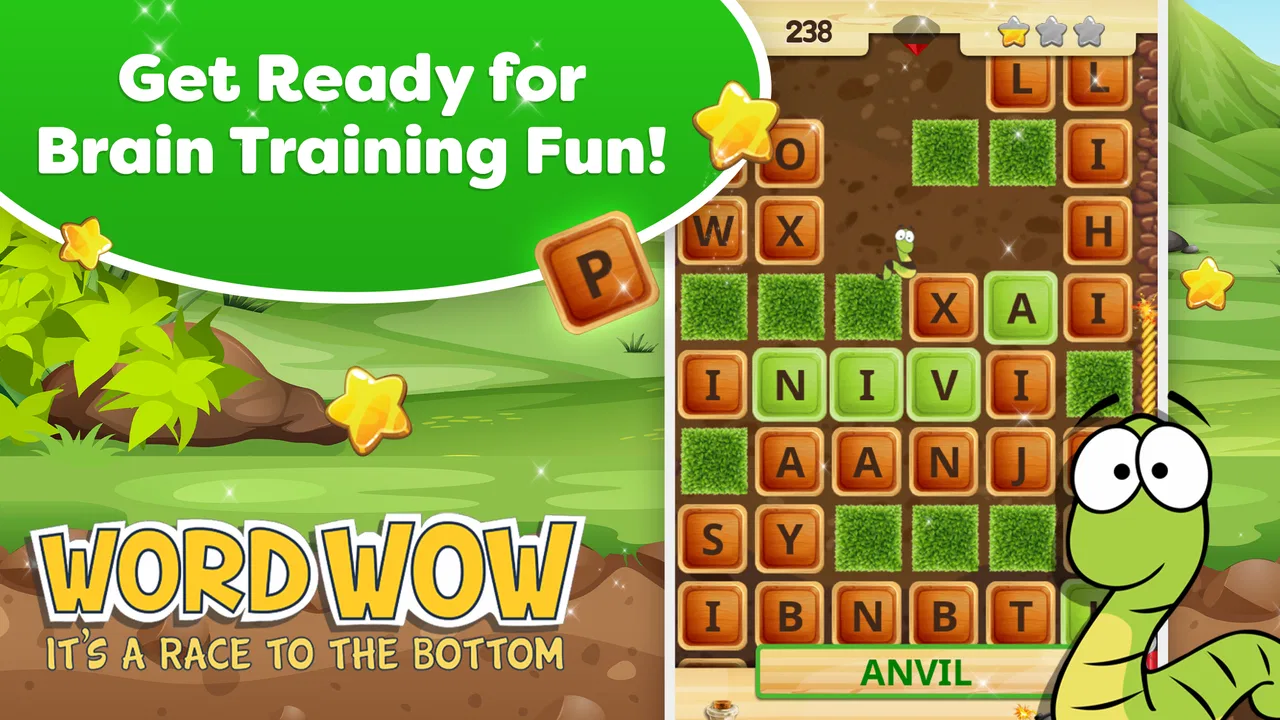
The opening appeal comes from how quickly the game explains itself through play. I do not need a long tutorial or a complicated set of rules before making progress. I look for connected letters, form a word, and watch the board respond. That immediate relationship between vocabulary and movement gives the game more energy than a conventional anagram puzzle.
You May Also Like

 Blood Strike: 2.5 Anniversary
Blood Strike’s Loadouts Turn Every Drop Into a Tactical Gamble
A close look at Blood Strike’s custom loadouts: how fast access to signature weapons reshapes its battle royale rhythm, rewards preparation, and narrows the gap between fights.

 Pandora - Music & Podcasts
Pandora’s Music Is Easy to Start, but Harder to Recover
Pandora’s strength is its low-effort path from a seed to a station. Its weak spot is how much confidence it asks you to place in connection, setup, and quiet recovery.

 8 Ball Pool
 Is Built on Rivalries, Rematches, and Routine
A close look at the rivalries, rematches, shared routines, and unanswered safety questions that turn a quick pool match into a persistent mobile community.

 Samsung Music
’s Quiet Strength Is Playing What You Already Own
Its reach comes less from spectacle than from dependable access to a personal library. That simplicity is both the app’s strongest retention engine and its ceiling.

 AccuWeather: Weather Radar
AccuWeather Review: A Quick, Clear Forecast for Everyday Decisions
For everyday plans, the best forecast is the one you can understand quickly. AccuWeather makes rain timing, radar, and local conditions easy to act on, with a few trade-offs.

 Hill Climb Racing
Why Hill Climb Racing Still Turns Crashes Into One More Run
A tiny car, a bumpy hill and one more upgrade: Hill Climb Racing keeps resurfacing because its simple chaos makes every near-miss feel personal.
More From Our News Desk



It also suits the way I actually use mobile games. A round can fit into a short wait, a coffee break, or the few minutes before bed. I can play without committing to a long session, yet the word search still asks for enough attention to stop me from playing entirely on autopilot. That balance is one of its strongest qualities: it is accessible for casual players without feeling completely passive.
The first few days are especially satisfying because I am learning the rhythm of the board at the same time as I am testing my vocabulary. I start by searching for obvious short words, then notice that a less obvious connection may open a more useful route. This creates a practical lesson that a generic word list cannot provide: the best word is not always the longest word. Sometimes a modest word is valuable because it changes the available space or keeps the next move alive.
That distinction matters if you are coming from a crossword, a spelling quiz, or a standard anagram app. In those games, I often judge a move by whether the answer is correct. Here, I also judge it by timing and position. A word can be valid and still be awkward if it leaves the board in an unhelpful state. I found myself thinking less like someone solving a vocabulary question and more like someone managing a small, constantly changing puzzle.
The game is also friendly to mixed skill levels. A confident word player can chase better combinations, while someone with a smaller vocabulary can still experiment and learn through repeated play. I would not describe it as a formal language course, because its emphasis is on play rather than explanations, but it does encourage me to notice word patterns. When I encounter an unfamiliar word, the useful part is not only that it works; it also becomes something I may recognize more quickly later.
A better way to play the early sessions
My most useful first-week adjustment was to stop scanning the entire board at once. Looking everywhere creates hesitation. I got better results by checking for a few likely connections, choosing one that preserved options, and then immediately reassessing the new layout. This makes the game feel less like a frantic search and more like a repeatable process.
I also learned not to spend every move trying to produce an impressive word. Chasing length can be tempting, especially when I see a promising cluster, but it can waste time or leave less flexible letters behind. I prefer to treat longer words as opportunities rather than obligations. If a shorter word gives me a cleaner next decision, it is often the smarter play.
That approach gives the game more depth than its brief store summary suggests. The challenge is not simply knowing words. It is recognizing patterns quickly, resisting a tempting but inefficient move, and maintaining enough awareness to react when the board changes. Those are small skills, but they are exactly what make the first week feel active instead of repetitive.
What remains useful after the novelty fades
After the initial discovery period, the game’s value depends on whether I want a compact mental warm-up. I do not open it expecting a large adventure, a story, or a social world. I open it when I want focused word play that begins immediately. That narrower purpose is a strength for routine use, provided I accept that the experience is intentionally concentrated.
For me, the best long-term use is as a transition between activities. I might play before starting work, during a break from reading, or when I want something more engaging than scrolling. The game gives my attention a clear target for a few minutes. It does not require the same emotional commitment as a larger puzzle game, and it does not ask me to remember a complicated plot or manage a growing collection.
It can also work as a gentle vocabulary habit. I would not use it as a replacement for a dictionary, flashcards, or structured language study, since the game does not turn every word into a lesson. However, repeated exposure to letter combinations and the need to search beyond the first obvious answer can make word recognition feel more flexible. The benefit is indirect: I am practicing quick retrieval rather than memorizing definitions.
One practical routine is to play a brief session at the same point in the day and stop before the game becomes tiring. That sounds simple, but it addresses a common problem with casual games. If I continue only because another round is available, the experience can change from a refreshing break into background repetition. The game has more lasting value when I use it deliberately instead of treating it as an endless obligation.
The free price makes that experiment easy. I can install it without paying upfront and decide from actual use whether the format suits me. There are optional in-app purchases ranging from $0.99 to $13.99 per item, so I would keep an eye on spending if I were handing the device to a child or allowing purchases on a shared account. The Everyone rating makes it broadly approachable, but age suitability does not remove the need for sensible purchase controls.
How it compares with familiar word-game alternatives
Compared with a crossword, this game is faster and less dependent on clues or general knowledge. I do not need to sit with one stubborn question for a long time. Compared with a traditional anagram game, it gives each word a more immediate physical consequence because the board changes as I play. Compared with a spelling-training app, it is more entertaining but less explanatory; it encourages discovery without necessarily teaching why a word means what it does.
That makes the choice fairly clear. I would choose this when I want motion, quick decisions, and a light vocabulary workout. I would choose a crossword when I want deeper clues and a slower solving session. I would choose a dedicated learning tool when my main goal is definitions, pronunciation, or systematic progress. The game is not trying to replace all of those experiences, and it is better judged as a focused hybrid of word search and arcade-style puzzle play.
It is less suitable for someone who wants a calm, completely unhurried puzzle. Even when the rules are easy, the need to keep looking and reacting can make the session feel pressurized. It may also disappoint players who need a strong sense of progression, a narrative, or a large variety of game systems. Its appeal comes from refining one central activity, not from constantly introducing new forms of play.
Maintenance, repetition, and the points where fatigue appears
The maintenance burden is low in one sense: I do not have to manage a complex account, organize a collection, or learn a large rulebook before returning. I can pick it up after several days away and understand what to do immediately. That makes it unusually convenient as a recurring habit. A game that demands too much re-entry effort rarely survives on my phone, and this one avoids that problem.
There is another kind of maintenance, though, and it comes from the player. To keep the experience fresh, I need to vary how I approach the board. If I always grab the first familiar word, I reduce the challenge to a reflex. If I alternate between quick safe moves and more ambitious searches, I stay more engaged. I also find it useful to play with a specific intention: speed, careful planning, or discovering less obvious combinations.
This is one of the less obvious trade-offs. The game gives me a stable core loop, which is why it is easy to return to, but that same stability can expose repetition. Players who enjoy polishing a familiar skill may appreciate it. Players who depend on frequent new mechanics may feel that the game has shown most of its hand fairly quickly.
Fatigue usually starts when I play beyond the length of session the design naturally supports. The first few rounds feel sharp because every choice is easy to understand but not always easy to make. Later, the visual search can begin to feel similar from one attempt to the next. I do not see that as a serious flaw for a short-break game, but it does limit how long I want to play continuously.
Another source of tiredness is vocabulary frustration. A player may recognize that a move exists without immediately seeing it, or may feel blocked by words that are unfamiliar. That can be motivating when I treat it as a challenge, but discouraging when I am already mentally tired. My solution is to stop treating every failed search as a test of intelligence. Sometimes the right response is simply to pause and return later.
The game is also not the best choice when I need a quiet, low-stimulation activity. Its word solving is mentally light compared with a demanding strategy game, but it still asks me to scan, decide, and react. For winding down, a slower crossword or a simple offline reading app may be more comfortable. For a commute or a short waiting period, however, its compact format is much more practical than a puzzle that requires a large uninterrupted block of attention.
Small habits that improve its staying power
I get more value from it when I avoid measuring every session by success. Some sessions are useful because I am quick; others are useful because I notice a new pattern or make myself slow down. That change in emphasis prevents the game from becoming a repetitive speed test.
I also recommend keeping the game in a limited role. It works well as a five-minute reset, but I would not build an entire evening around it unless I already know that repeated word searching is my preferred form of relaxation. The strongest recurring use is modest and regular, not excessive.
For families, the Everyone rating and straightforward rules make it approachable, but I would still play alongside younger users if the goal is learning. Asking why a word was chosen, or inviting a child to find an alternative route, turns the activity into conversation rather than silent screen time. The game itself supplies the challenge; the parent or teacher can supply the explanation that a dedicated educational tool might provide.
For adults trying to maintain a small daily brain-training habit, I would frame it as activation rather than proof of improved intelligence. It is good at making me search, compare, and respond. That is a worthwhile mental exercise, but I would not confuse enjoyable practice with a complete cognitive program. Its lasting benefit comes from regular engagement and variety in my wider routine, not from expecting one word game to do everything.
My long-term verdict on keeping it installed
I think this game earns a place on my phone if I want a reliable, quick word challenge rather than a broad entertainment package. Its strongest feature is the connection between vocabulary and movement: I am not merely identifying words, I am using them to make progress through a changing puzzle. That gives ordinary letter finding a sense of urgency without making the rules difficult to learn.
Its limitations are just as clear. The focused design can become repetitive during long sessions, and it does not offer the depth of a crossword, the teaching structure of a language app, or the variety of a larger puzzle collection. Players who need constant novelty should probably look elsewhere. So should anyone who wants detailed explanations of vocabulary or a carefully measured learning curriculum.
For everyone else, the free entry point makes it easy to test without much commitment. I would install it for short breaks, use the first few sessions to learn how the board rewards flexible thinking, and then decide whether the core loop still feels satisfying after the novelty settles. Keeping sessions brief, choosing moves for more than just length, and occasionally changing my playing style are the habits that make it last.
My final view is positive but specific: Word Wow - Brain training fun is best as a repeatable mental snack, not an all-day meal. It has enough decision-making to feel meaningful, enough accessibility for casual play, and enough word variety to support a small routine. I would recommend it to a friend who wants an active alternative to scrolling and enjoys letter puzzles. I would not recommend it as a substitute for serious language study or for players who need a constant stream of new systems.
Because it is free, rated Everyone, and maintained in a current version, the barrier to trying it is low. If the first-week rhythm feels satisfying, it can remain useful month after month as a compact habit. If the repeated board-searching starts to feel like work, there is no reason to force it. In my experience, its real success is not that it can fill unlimited hours; it is that it can make a few spare minutes feel sharper and more enjoyable.
FAQs for Word Wow - Brain training fun
01What is Word Wow - Brain training fun?
Word Wow - Brain training fun is a word puzzle game that combines vocabulary challenges with a simple falling-ball adventure. You create words from the available letters to help a cute character move downward through each level. The game is designed for short, relaxing sessions, while still encouraging players to think quickly, recognize word patterns, and improve their spelling and vocabulary skills.
02How do you play Word Wow - Brain training fun?
Gameplay is easy to understand, but some levels become surprisingly challenging. You select adjacent or connected letters to form valid words and clear them from the board. Your objective is to guide the worm through the level while avoiding obstacles and reaching the bottom safely. Longer words, strategic moves, and careful planning are important when the available letters become limited.
03Is Word Wow - Brain training fun suitable for children and adults?
The game is suitable for a wide range of ages because it uses straightforward controls and does not require previous gaming experience. Children can use it to practice spelling and vocabulary, while adults may enjoy it as a casual brain-training activity. However, difficulty increases over time, so younger players may occasionally need help with unfamiliar words or more complex levels.
04Can Word Wow - Brain training fun be played offline?
Many of the core puzzles can generally be enjoyed without a constant internet connection, making the game convenient for travel, commuting, or relaxing away from Wi-Fi. Nevertheless, certain features may depend on connectivity, including advertisements, purchases, synchronization, updates, or other online services. It is best to open the game online first and confirm which functions remain available offline on your device.
05Is Word Wow - Brain training fun free to download?
Word Wow - Brain training fun is typically available as a free download, allowing players to try its main word puzzles without paying upfront. Like many free mobile games, it may include advertising, optional in-app purchases, or extra features that can be unlocked. Before downloading, check the current store listing for supported devices, purchase details, privacy information, and any age-related requirements.
Pros
- Simple word puzzles are easy to learn and suitable for quick sessions.
- Increasing difficulty keeps the game engaging as skills improve.
- Grid-based gameplay adds a fun challenge beyond ordinary word searches.
- Helpful power-ups can assist when a level becomes difficult.
- Works well as a casual offline game for travel or short breaks.
Cons
- Some levels may feel repetitive after extended play sessions.
- Hints and power-ups can become limited without careful use.
- Later puzzles may be frustrating for players wanting a relaxed experience.
- Ads may interrupt gameplay
- depending on the device and version.
- The game offers less variety than larger
- feature-rich brain-training apps.

Word Wow - Brain training fun
Gallery